Spanish bank invests in rural China

Banco Santander is planning a $400 million+ joint venture with China Construction Bank to develop rural China. One possible perk, China South America points out, is that they may be able to bypass the 20% ownership limit for foreign ownership of urban banks.

See China South America for more details.


Image of the day: Nengmao store

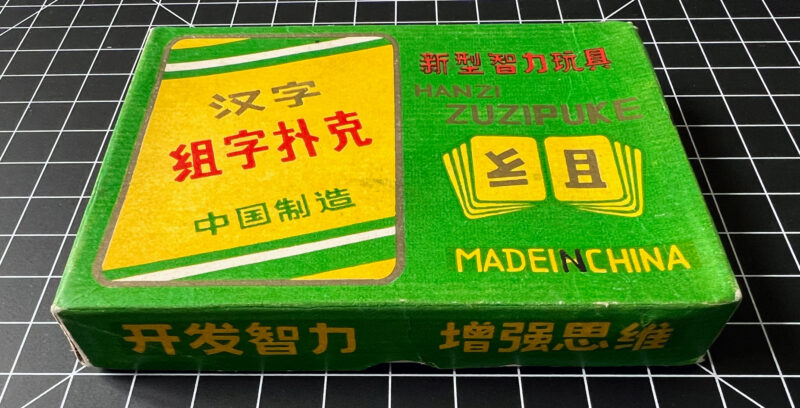
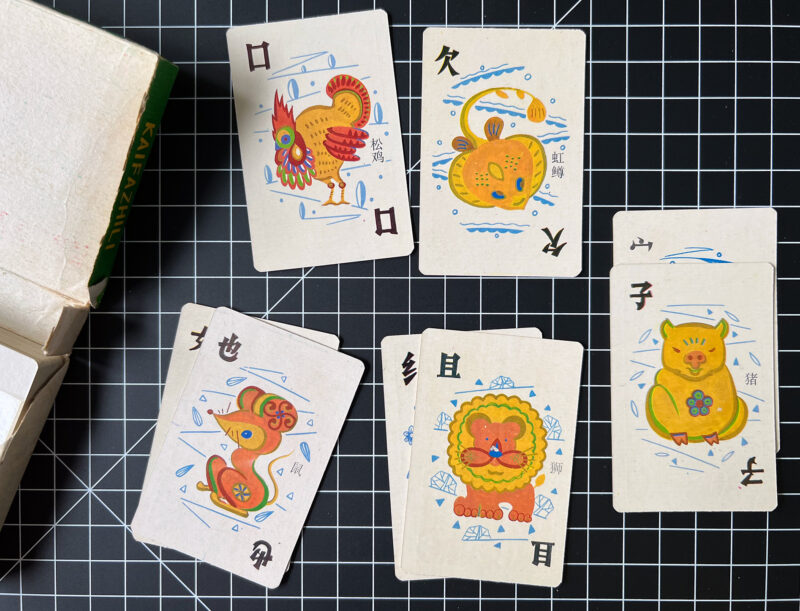
Retro 80s:

Via the NeochaEDGE newsletter.


Dissecting China’s “hipsters”

Chinayouthology has a piece over on their blog explaining who the Chinese hipsters are. The term of “hipsters” in Chinese is 潮人, which literally translates to “trendy/hip person” and sounds a bit like 超人 (“super man”). The term is more straightforward than the American word “hipster” and not as unique a classifier. (Arguably, the term “hipster” in English has lost its subcultural roots as well.)

The post continues to define two types of hipsters, creative (those closer to being cultural producers) and mainstream (the followers). While I found the market segmentation of hipsters into two distinct categories too forced, I did enjoy their description of the creative hipster’s general sentiment:

Not all of the creative people look hip. But some of them do look really trendy. In fact they don’t care to ‘look’ cutting-edge but just care to be different. They usually HATE to be labeled as ‘Chao Ren’ which in their perception refers to ‘mainstream hipsters’.

Read the original post. (Via Frank Yu’s twitter.)


Adding some nuance to the one-child policy

I found this many months ago but it is still relevant. From a Reuters article on the one-child policy:

China’s famous “one child” policy is actually less rigorous than its name suggests, and allows urban parents to have two offspring if they are both only children. Rural couples are allowed a second child if their first is a girl.

This is still the official line in most of China, but the financial hub of Shanghai is now rich enough to focus on a new concern — the burden of an ageing population of native-born Shanghainese…

The number of couples eligible to have two children rose from 4,600 in 2005 to 7,300 in 2008, he added.

Of course, 7300 in a city of over 16 million people… who are the 7300 “eligible”?

Via shortformblog, full article by Reuters here.


A review of Hong Kong’s future

Leung Chun-ying writes in the Hong Kong Journal about Hong Kong’s future as “Asia’s world city” and the two key problems it faces:

  1. Local income disparity: “Restaurant workers today earn 4% less than they did 17 years ago. Workers in fast food outlets earn 19% less. Those driving container lorries earn 30% less.” + “Barely a quarter of Hong Kong families share what could be described as a “middle class” lifestyle. Note that just 15% own cars, and 10% have the resources to employ a domestic helper.”
  2. Mediocre relationship with the mainland: “Hong Kong’s mission in Beijing amounts to just 30 people, while Shanghai and Guangzhou have many more in the capital lobbying for their respective interests. Even Singapore has a larger Beijing presence.”

See the original article, Does Hong Kong have the policy vision needed for the coming years?


Chinese New Year mashup of Lady Gaga’s Poker Face

He is singing about Chinese New Year. It is awesome.

Via Adri.


Some cute for Chinese New Year

招财童子 (the wealth-bringing-seeking children) are a suite of Chinese-themed, adorable, cartoon characters. For example:

Since I profiled their Opera-themed siblings in 2007 (here), they’ve become famous enough to appear on T-shirts, silly Flash animations and phone cards:

Happy preemptive Chinese New Year folks!

Go to their site now to watch a short, download a wallpaper…


A look back at China’s first domestically produced cartoon

According to CNNGo:

“Live like the pleasant goat, and marry someone like the big big wolf.” That’s one of China’s most well-known catchphrases since the cartoon “The Pleasant Goat and the Big Big Wolf” (喜羊羊灰太狼), the first domestically produced Chinese cartoon, was broadcast in 2005. The characters starring in nearly 600 episodes, broadcast by 65 TV stations, of curious-looking goats and wolves, made themselves household names across China and count children as well as their parents among their fans.

I watched a couple minutes of the actual cartoon, impressions:

  • The story is unspectacular, but not below the standard for children’s cartoons in general (say in the US). The plot and characters are relatively sterile and child-friendly.
  • The animation and sounds are simple, but generally without flaws.

Overall, it’s not a product for cultural export, but as a domestic product it does its job.

For more details, see CNNGo’s article. To watch more, search for 喜羊羊 on Youku.


Print culture in ancient China

Frog in a Well has an interesting article about print culture and publishing in historic China:

Happily, China had a thriving printing culture for a good thousand years before the introduction of western-style printing machinery in the late 19th century created a modern publishing industry, so we know something about this.  The Chinese reluctance to adopt movable type  is even now sometimes presented as a puzzling example of the anti-technological bias of those silly people, but actually there was no great need for it.

Woodblock printing had already begun revolutionizing Chinese culture by at least the Song dynasty, and movable type did not add much. One of the big advantages of woodblock printing was that it cheaper and required less capital. To print a book with movable type need a set of type with many copies of each letter (expensive in the West, more so in China) and literate typesetters. Since the type is broken up up after printing a page you need to have the capital to buy enough paper (usually a major expense) and to wait for the things to sell or to swallow the loss if they don’t. With Chinese block printing you needed a literate author to write the book, but then you could paste the paper on a woodblock and have an illiterate (and cheap) carver cut it out.

Storing all the woodblocks could be a pain, but since you did not break them up you could print as many copies as you needed (print on demand!) and then keep the blocks. At least some literati would leave their woodblocks in their wills. (I know Yuan Mei did, and I would guess others did too.) There was far less need for the work publishers do and the capital they provide.

See the full article entitled China, where the future is already the past.


Foreign artists find a safe haven in China


Ice scupltures by Joseph Ellis

Alfredo Martinez at work

The New York Times has an interesting article about various artists who have chosen to go to China to maximize their creativity. Reasons include the cheap costs of materials and (other people’s) labor, an escape from the spotlight of the New York art scene, and China’s gritty lawless feeling that accompanies its rapid development.

See the full article here: For Expatriates in China, Creative Lives of Plenty.

Via Robin Peckham’s Twitterstream.